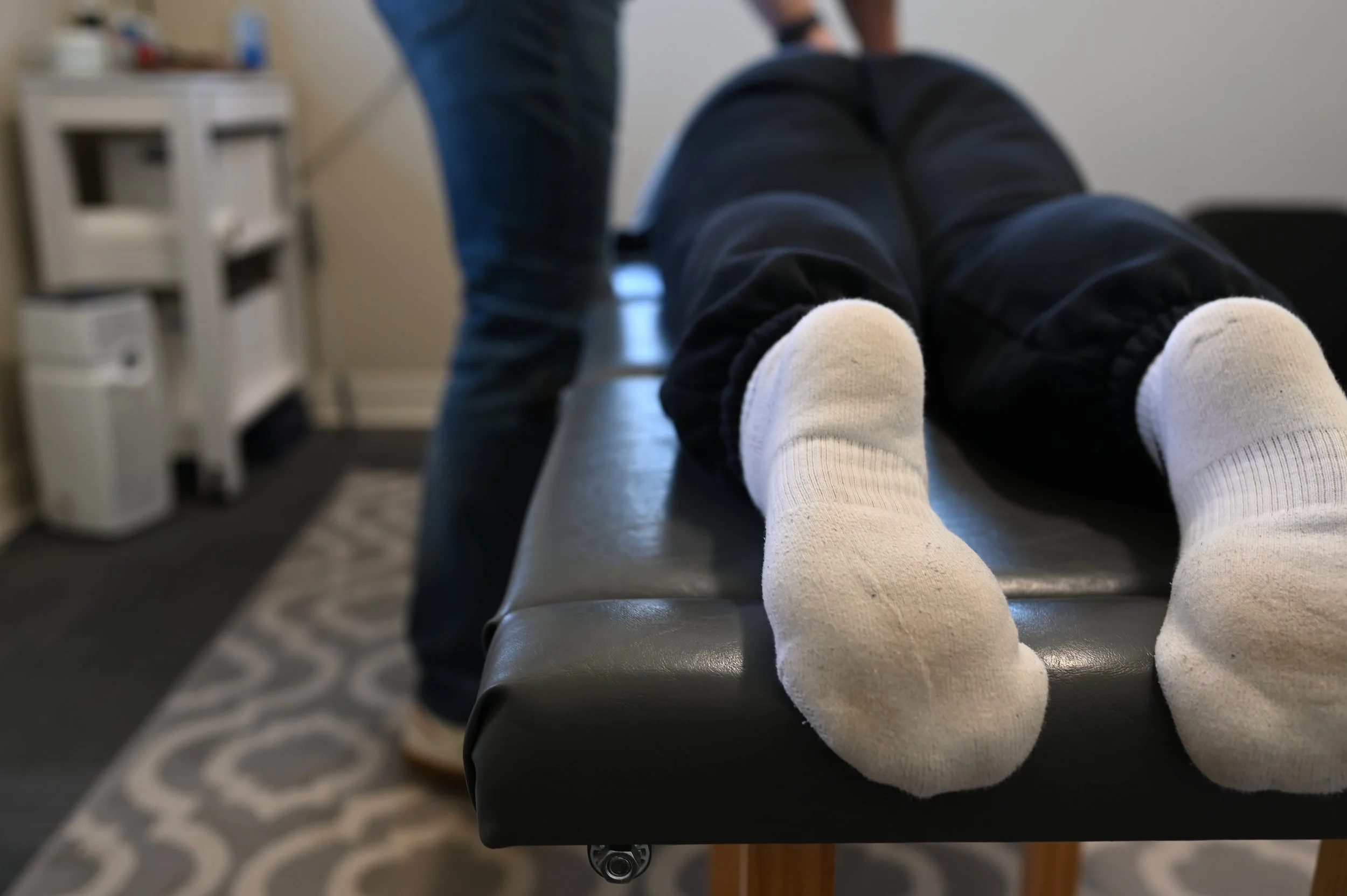
That Burning Feeling Between Your Toes Isn't What Your Doctor Thinks It Is
Three months ago, you started noticing something weird. Not painful at first—just... odd. A tingling sensation between your toes. Maybe it felt like your sock was bunched up, even though it wasn't. You'd take off your shoe, adjust everything, put it back on. Still there.
Now? Now it's burning. Sometimes it shoots up into your toes. Other times it feels like you're walking on a marble that you can't shake out of your shoe. You've Googled it (of course you have), and everything points to something called an interdigital neuroma—probably Morton's neuroma if it's between your third and fourth toes.
Your doctor confirmed it. Gave you a cortisone shot, told you to get wider shoes, maybe some metatarsal pads. "If it doesn't get better, we can talk about surgery."
Cool. Except it's not getting better. And you're starting to wonder if you're going to have to give up your morning runs around Lake Monona or that hiking trip to Devil's Lake you've been planning.
Here's what I need you to understand: that neuroma—that inflamed, angry nerve between your toes—is real. But it's probably not the actual problem.
Let's Talk About What a Neuroma Actually Is (Without the Medical Textbook Language)
A neuroma is basically a nerve that's getting compressed and irritated. In your foot, there are nerves that run between the long bones (metatarsals) that connect to your toes. When those bones squeeze together repeatedly, the nerve between them gets pinched. Over time, the nerve tissue gets inflamed and thickens. That's your neuroma.
The burning, tingling, shooting pain you're feeling? That's the nerve essentially screaming "Hey! Stop squishing me!"
Most treatments focus on giving that nerve more space—wider shoes, pads to spread the metatarsals apart, shots to reduce inflammation, or surgery to remove the nerve entirely.
All of these approaches assume the same thing: that your metatarsals are just naturally squeezing together too much, and we need to force them apart or eliminate the nerve that's complaining about it.
But here's the question almost nobody asks: Why are your metatarsals squeezing together in the first place?
The Real Question Nobody's Asking You
When someone walks into our Windsor office with neuroma symptoms, I don't immediately start talking about their forefoot. I ask them to walk across the room. I watch how their whole body moves.
Because here's what we see over and over again: the forefoot compression that's causing the neuroma is almost always the end result of dysfunction happening somewhere else.
Your foot is trying to stabilize something that another part of your body should be handling. And the way it stabilizes is by gripping—kind of like how your hand clenches when you're trying to balance on something unstable. When your foot is constantly gripping and clenching, those metatarsals squeeze together. That nerve gets compressed. Neuroma develops.
Giving you a wider shoe or a metatarsal pad is like giving you a bigger glove when the real problem is that you're gripping so hard your hand is cramping. Sure, the bigger glove might feel better temporarily, but you're still gripping.
What Your Foot Is Actually Responding To
Let me walk you through what we typically find when we assess someone dealing with a neuroma that won't resolve:
Your ankle has forgotten how to move properly. I see this constantly, especially in people who've had ankle sprains—even ones from years ago that seemed to heal fine. Your ankle should be mobile in multiple directions. When it's stiff or restricted, your foot has to compensate by working harder during every step. Part of that compensation? Gripping with the forefoot. Metatarsals squeeze together. Nerve gets pinched.
Your arch is collapsing—but not because it's weak. Everyone wants to blame weak arches for foot problems. But what we usually find is that the arch is collapsing because something upstream isn't doing its job. Maybe your hip isn't controlling your leg rotation properly. Maybe your calf muscles are too tight. Maybe your big toe can't extend properly. Whatever the cause, your arch collapses, your forefoot has to grip to try to stabilize, and that nerve is caught in the crossfire.
Your big toe isn't doing what it's supposed to do. This one surprises people. Your big toe should extend (bend upward) significantly when you walk. If it doesn't—maybe from stiffness, maybe from wearing narrow shoes for years, maybe from arthritis starting to develop—your foot changes its push-off pattern. Instead of rolling smoothly through your big toe, you're pushing off more through your forefoot. More pressure. More compression. More neuroma irritation.
Your walking pattern has adapted to protect something else. Sometimes people develop neuromas after an injury somewhere completely different. You sprained your knee six months ago. It healed, but you're still subtly favoring it. Your gait changed. Your foot is working differently to compensate. And now you've got this burning between your toes that seemingly came out of nowhere.
I had someone come in recently who'd been dealing with neuroma pain for over a year. Nothing helped. Turns out she'd been compensating for hip pain from a cycling injury. Her hip felt fine by the time we saw her, but her body had locked into this protective walking pattern where her foot was doing way too much work. We addressed the walking pattern and the residual hip restriction—didn't touch her forefoot at all—and the neuroma symptoms decreased by 80% in three weeks.
Why the Standard Treatments Keep Failing You
Don't get me wrong—wider shoes are better than narrow shoes. Metatarsal pads can provide temporary relief. Cortisone shots reduce inflammation. These aren't bad interventions.
But they're all addressing the site of pain, not the source of the problem.
If your foot is constantly gripping and compressing because your ankle is stiff, your arch is collapsing, your big toe won't move, or your walking pattern is dysfunctional—no amount of padding or shoe changes will permanently fix it. You're treating the symptom while the cause keeps chugging along.
And surgery? Removing the nerve eliminates the pain signal, sure. But it doesn't change why your forefoot was compressing in the first place. You might get relief, but you're left with a foot that's still dysfunctional—and now you've got a numb area where that nerve used to be. We've seen plenty of people who had neuroma surgery only to develop problems elsewhere because the underlying movement dysfunction was never addressed.
What Actually Changes Things
When we work with someone dealing with neuroma pain, we're looking at the whole system. Not just the foot—the entire chain of movement that affects how your foot hits the ground.
We test ankle mobility in all directions. Can it dorsiflex (pull your toes toward your shin)? Can it rotate? Where's it stiff or restricted? If we find restrictions, we address them. Suddenly, your foot doesn't have to work so hard to compensate for an ankle that won't move.
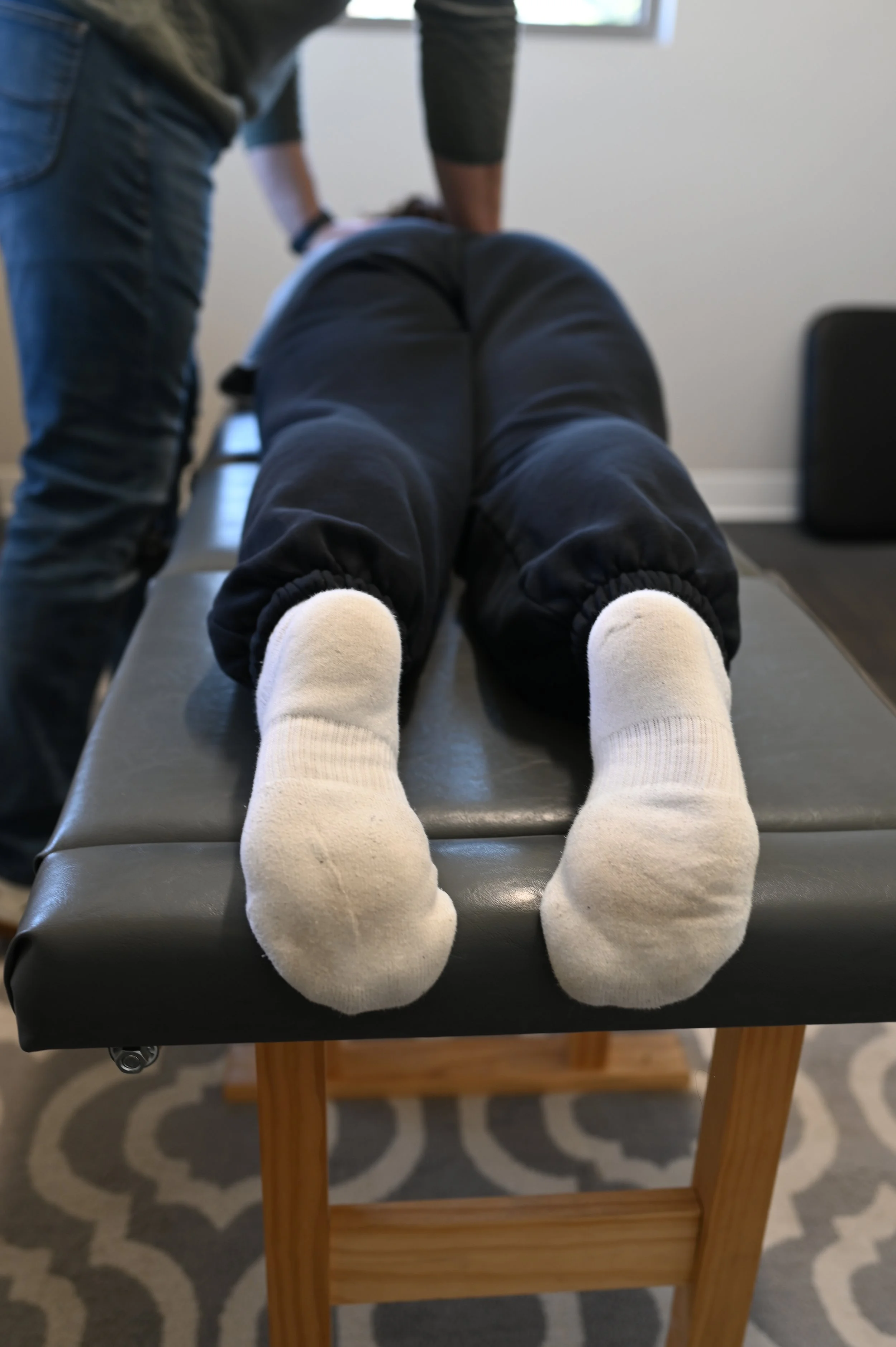
We assess your big toe extension. Can it bend upward enough for a normal push-off? If not, we figure out why and restore that motion. Your push-off pattern normalizes. Less pressure on the forefoot. Less compression on that nerve.
We watch your gait. How does your hip control your leg? How does your arch respond to loading? What's your foot actually doing during different phases of walking? We identify the dysfunctional patterns and work to correct them. Your foot stops constantly gripping and stabilizing things it shouldn't have to stabilize.
We check your footwear—not just width, but structure and support in relation to YOUR specific foot mechanics. Sometimes the shoes you thought were helping are actually reinforcing the problem.
What People Notice When We Take This Approach
The changes usually don't happen overnight. This isn't a magic bullet situation. But here's what people typically report:
First, they notice the constant burning sensation starts to decrease. It might still flare up during long walks or runs, but it's not there all the time anymore. Maybe you can make it through your workday at Buck and Honey's without wanting to rip your shoes off by 2 PM.
Then they notice they can wear a wider variety of shoes without triggering symptoms. You're not stuck in those clunky wide-toe-box shoes anymore. You can wear normal shoes to that wedding or that meeting downtown without spending the whole time thinking about your feet.
Eventually, they start returning to activities they'd given up. One patient recently told me she signed up for the Crazy Legs Classic 8K—something she'd avoided for two years because she was convinced her neuroma would flare up. She finished it without any neuroma pain. Not because the neuroma magically disappeared, but because her foot wasn't constantly compressing anymore.
Another guy who golfs at University Ridge regularly said he could finally play 18 holes without that burning sensation starting around hole 12. He'd been limiting himself to 9 holes for months, thinking that was just his new reality. Turns out his ankle stiffness from an old sprain was causing his foot to grip excessively during his golf swing. We fixed the ankle mobility, his foot mechanics improved, and he's back to playing full rounds.
The At-Home Tests You Can Try Right Now
Before you do anything else, try these simple assessments. They'll give you clues about what might actually be driving your neuroma:
Big Toe Extension Test: Sit down and try to pull your big toe upward (toward your shin) while keeping your foot flat. Can you get it to bend back at least 45 degrees easily? Or is it stiff and restricted? If it's limited, that's a huge clue that your push-off pattern is probably dysfunctional.
Ankle Mobility Test: Stand facing a wall with your toes about 4 inches away. Keeping your heel on the ground, try to touch your knee to the wall. Can you do it easily? If not, your ankle dorsiflexion is limited, and your foot is probably compensating.
Single-Leg Balance Test: Stand on one leg for 30 seconds. Don't just see if you can balance—pay attention to what your foot is doing. Is it calm and stable, or is it gripping and tensing the whole time? If it's gripping, that's your default pattern. Your foot is constantly working overtime.
The Walking Assessment: Walk barefoot across a hard floor and pay attention. Do you feel like you're gripping with your toes? Does your foot slap down? Do you barely use your big toe for push-off? Any of these are signs of dysfunctional movement patterns that could be compressing your forefoot.
Here's What You Should Actually Do Next
If you're dealing with neuroma pain that isn't responding to standard treatments, stop focusing solely on your forefoot. The answer isn't in padding it more or making more space between your toes—at least not as the primary solution.
Start asking why your forefoot is being compressed in the first place. Get your ankle mobility assessed. Have someone evaluate your big toe extension. Look at your walking pattern. Check your hip stability.
And be honest with yourself about your footwear history. If you've spent years in narrow, restrictive shoes (looking at you, fashion boots and dress shoes), your foot has adapted. Those adaptations don't disappear overnight just because you switched to wider shoes last month.
At our office in Windsor, this is exactly what we do. We don't just treat your neuroma—we figure out why you have a neuroma. We assess your entire lower extremity and how it moves as a system. Then we create a specific plan that addresses YOUR particular dysfunction pattern.
Maybe it's ankle mobility work. Maybe it's big toe mobilization. Maybe it's gait retraining. Maybe it's addressing that old hip injury you forgot about. It's different for everyone because the root cause is different for everyone.
The Timeline You Should Expect
I'm not going to lie to you and say this fixes itself in two weeks. Neuromas that have been developing for months or years don't resolve instantly. The nerve tissue is inflamed and sensitized. That takes time to calm down.
But what you should notice relatively quickly—within a few weeks—is that the constant symptoms decrease. The burning isn't there all the time. You can walk further before it bothers you. You're not obsessing about it every hour of the day.
Over the next several weeks to months, as we address the underlying movement dysfunctions, you should see continued improvement. More activities become possible again. You're not constantly modifying everything you do to accommodate your foot. You're getting back to normal life.
Some people get 80-90% better. Some get completely better. Some get good enough that they can manage the occasional flare-up without it controlling their life. Outcomes vary based on how long the problem's been there, how severe the nerve irritation is, and how many contributing factors need to be addressed.
But here's what I can promise: addressing the root cause will always give you better long-term results than just managing symptoms.
Stop Letting a Nerve Between Your Toes Run Your Life
You didn't sign up to have your activities limited by burning foot pain. You didn't plan to spend your weekends researching wide toe-box shoes instead of actually doing the things you love.
If you're in the Madison, Windsor, or DeForest area and you're tired of temporary fixes that don't address why this is happening, let's figure it out. Let's look at your ankle, your big toe, your walking pattern, your whole system—and let's find out what's really causing that forefoot compression.
Book a comprehensive assessment at our Windsor office. We'll take the time to understand what your body is actually doing and why. Then we'll create a plan that addresses the cause, not just the symptom.
Because you're made to move. And move well. Not tiptoe around life wondering which shoes won't trigger that burning sensation today.
Ready to figure out what's really going on? Call our office or book online. Let's get you back to moving and moving well to do what you love.