Why Your Plantar Fasciitis Keeps Coming Back (And It's Probably Not Your Feet)
You roll out of bed in the morning, and that first step feels like you're walking on broken glass. Again. You've tried the night splints, the fancy insoles, the ice bottle rolls under your desk. Maybe you've even taken a break from running or that weekend basketball league you love. The pain gets a little better, you ease back into activity, and then—like clockwork—it comes roaring back.
Here's what's frustrating: everyone keeps treating your feet, but your feet might not be the real problem.
The Story Your Feet Are Trying to Tell You
Let's get something straight—your plantar fascia (that thick band of tissue running along the bottom of your foot) is definitely angry and inflamed. That part's real. But here's the thing we see all the time at our Windsor office: your plantar fascia is often the victim, not the villain.
Think of it like this: if your car keeps burning through brake pads on one side, you wouldn't just keep replacing the pads and calling it good, right? You'd want to know why that side is working so much harder. Maybe the alignment is off. Maybe a caliper is stuck. The brake pad is taking the beating, but it's not the root cause.
Your plantar fascia is that brake pad.
What's Really Happening (The Part Most Providers Miss)
When we assess someone dealing with chronic plantar fasciitis—the kind that keeps coming back no matter what you do—we're looking way beyond the foot. Here's what we typically find:
Your Ankle Isn't Moving Right
Your ankle should move freely in multiple directions. When it doesn't—whether from an old sprain you barely remember, chronic tightness, or compensations from somewhere else—your foot has to work overtime with every single step. That plantar fascia gets stretched and strained repeatedly, trying to stabilize what your ankle should be handling.
Your Hips Are Checking Out
Stay with me here. When your hip isn't doing its job of controlling your leg position, everything below has to compensate. Your knee rotates differently. Your shin bone shifts. Your arch collapses more than it should. All of that extra motion? Your plantar fascia is trying desperately to control it.
We see this constantly with runners at Devil's Lake or golfers at University Ridge—they're working so hard on their foot, but the real issue is 2-3 joints up the chain.
Your Nervous System Is Stuck in Protection Mode
This one's subtle but huge. After months of plantar fasciitis pain, your nervous system starts limiting how your entire leg moves. It's trying to protect you, but it creates this rigid, inefficient movement pattern. You're essentially walking or running in a brace that you can't see—and that creates even more stress on the plantar fascia.
Why Traditional Treatments Fall Short
Don't get me wrong—stretching your calf, rolling your foot, getting better shoes—these things can help. They're just not usually enough on their own because they're only addressing the site of pain, not the source of the problem.
It's like mopping the floor while the sink is still overflowing. Sure, the floor looks better for a minute, but you haven't fixed anything.
Here's what we typically see people try:
Orthotics (which can help but don't address why you needed them in the first place)
Rest (pain goes away, but the dysfunction is still there waiting)
Stretching and rolling (feels good temporarily but doesn't change movement patterns)
Cortisone shots (masks the pain while you keep doing the thing that caused it)
These aren't bad approaches. They're just incomplete.
The Root Cause Approach That Actually Works
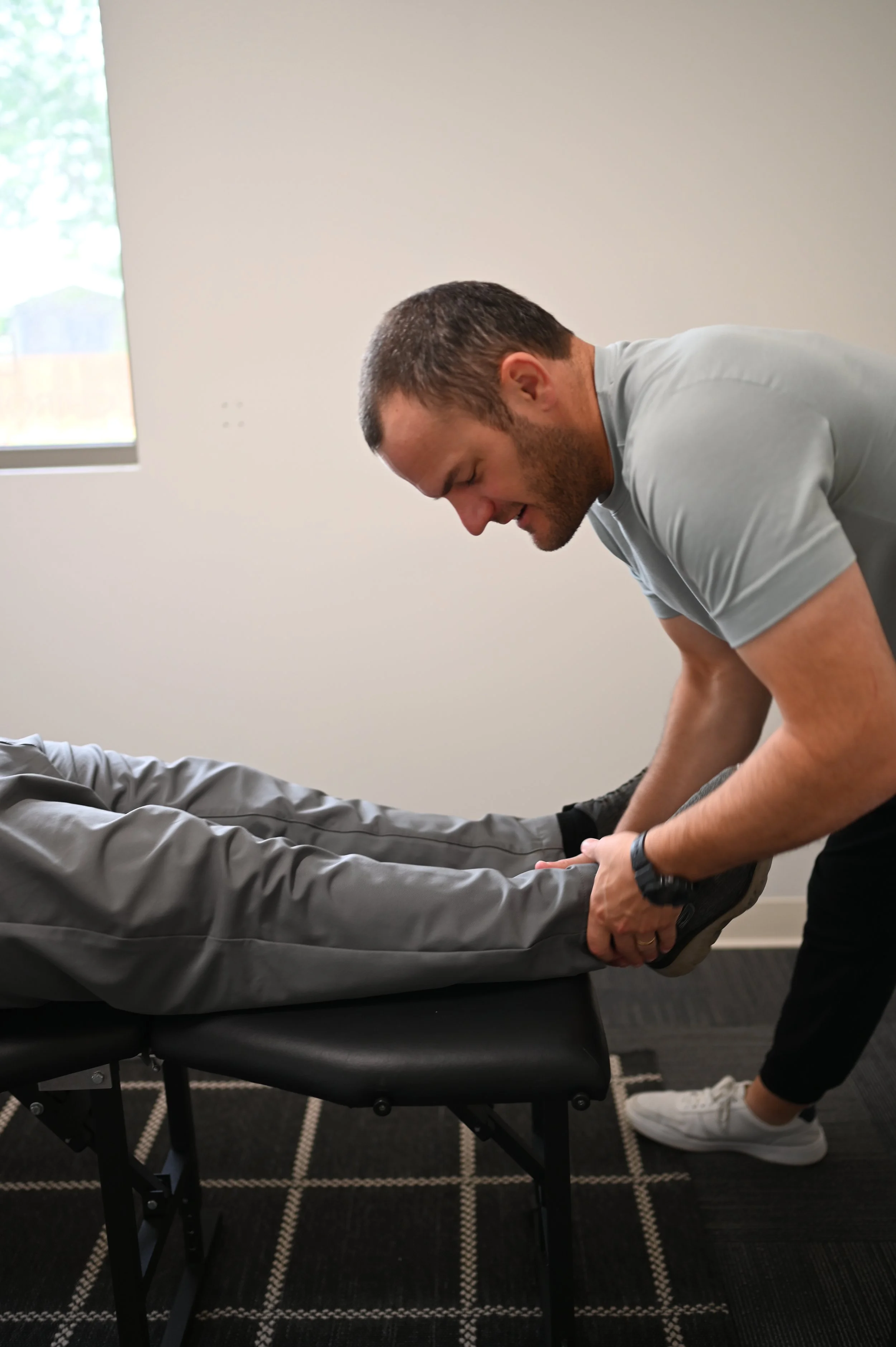
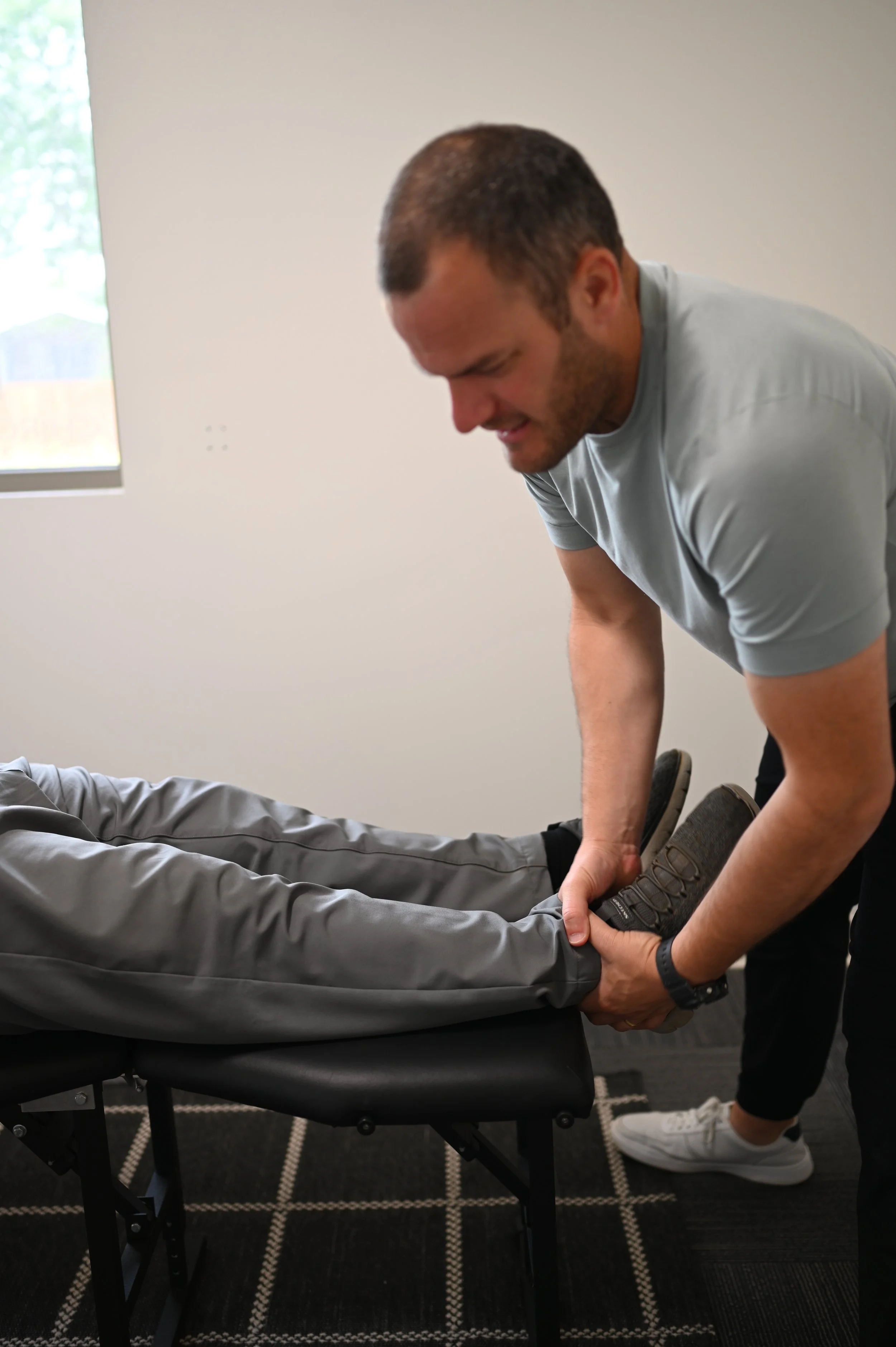
When someone comes into our office in Windsor with plantar fasciitis, we're not just looking at their feet. We're doing a comprehensive movement assessment to find out WHY their plantar fascia is under so much stress.
We Check Your Entire Kinetic Chain
How's your ankle mobility? What about your hip control? Is your pelvis level? How does your spine move? All of these factors influence how force travels through your body with every step. Find the breakdown in the chain, address it, and suddenly your foot doesn't have to work so hard.
We Address the Nervous System Component
Remember that protective pattern we mentioned? We use specific adjustments and movement techniques to help reset those patterns. Your nervous system learns that it's safe to move normally again—and when it does, the chronic tension on your plantar fascia decreases dramatically.
We Give You Specific Tools, Not Generic Exercises
You don't need another printout of general stretches. You need the specific movements that address YOUR dysfunction pattern. Maybe that's hip mobility work. Maybe it's ankle stability exercises. Maybe it's learning to properly load your foot during your golf swing. It's different for everyone because the root cause is different for everyone.
What Madison-Area Active Adults Notice After Starting Care
Most people tell us they notice changes in stages:
Weeks 1-2: Morning pain starts to decrease. You're still cautious, but those first few steps aren't quite as brutal.
Weeks 3-4: You can make it through your workday without constantly thinking about your foot. Maybe you try that lunchtime walk around Firemens Park without limping afterward.
Weeks 5-8: You're starting to ease back into activities. You're running a couple miles instead of just walking. You're playing 18 holes instead of stopping at 9.
Weeks 8-12: You're back to your normal activities with confidence. More importantly, you understand what caused the problem and what to watch for so it doesn't come back.
Is this timeline the same for everyone? No. Some people improve faster, some take longer depending on how long they've dealt with it and what other factors are involved. But this is what we typically see when we address the actual root cause instead of just chasing symptoms.
The Questions You Should Be Asking
If you're dealing with plantar fasciitis that won't go away, here are the questions worth asking:
Has anyone checked your hip mobility and strength? If all the attention has been on your foot and ankle, you're missing a huge piece of the puzzle.
Has anyone assessed how your entire leg moves as a system? Individual parts might test fine, but the pattern might be a mess.
Has anyone explained WHY you developed this in the first place? "You're a runner" or "you're on your feet all day" isn't an explanation—plenty of runners and people with standing jobs don't get plantar fasciitis.
Are you just treating pain, or are you addressing function? If the goal is just getting your pain from a 7 to a 3, you're still working with a dysfunctional system.
What You Can Do Right Now
While you're figuring out the root cause, here are some things that can help manage symptoms:
Stop Stretching Your Plantar Fascia Constantly
Sounds counterintuitive, but if it's already irritated and overstretched, more stretching isn't always helpful. Focus instead on gentle ankle mobility in all directions.
Check Your Hip Mobility
Try this: lie on your back and bring one knee toward your chest. Does it move easily? Does it pull to one side? Does your lower back arch off the floor? These are clues that your hip isn't moving properly, making your foot work harder.
Pay Attention to Your Patterns
When do you notice the pain most? First thing in the morning (nervous system component)? After sitting (mobility issue)? During specific activities (movement pattern problem)? These patterns tell you a lot about what's really going on.
Ready to Actually Fix This Thing?
If you're tired of managing plantar fasciitis and ready to understand why it keeps happening, that's exactly what we do. We don't just treat your feet—we figure out what's making your feet work so hard in the first place.
Our comprehensive assessment looks at your entire movement system to find the actual source of the problem. Then we create a specific care plan that addresses YOUR root cause, not just generic plantar fasciitis protocols.
Curious about what's really causing your plantar fasciitis? Let's figure it out together. Book a comprehensive assessment and let's get you back to running the Madison trails, playing golf at Windsor Lake, or just walking through your day without that first-step dread.
Because you're made to move. And move well. Not hobble around wondering when your foot is going to betray you again.
Ready to schedule? Call our Windsor office or book online. We'll help you understand what's happening and create a plan to actually fix it—not just manage it.