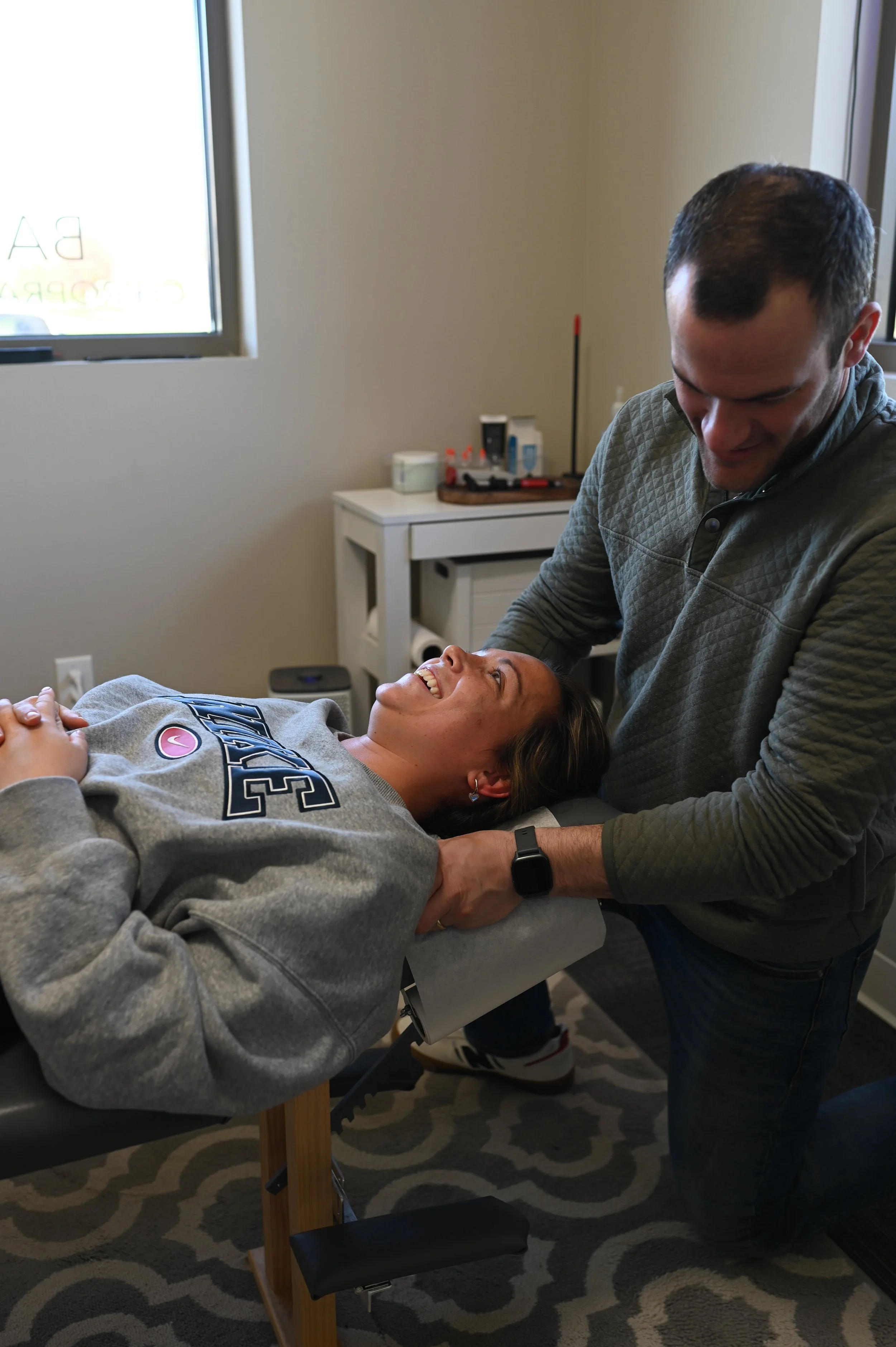
There is a version of this story that a lot of people in the Madison area know all too well.
You wake up one morning and something hurts. Maybe it is your low back. Maybe it is your hip or your knee. You figure it will pass in a few days, so you back off your usual run or skip your weekend round of golf and give it some rest. A few days become a few weeks. A few weeks become a couple of months. And somewhere in the middle of all that waiting, something shifts, and it is not just the pain.
The physical stuff gets most of the attention. But what happens in your head when the activities that define how you show up in the world are suddenly off the table, that part of the story does not get talked about nearly enough.
You Are Not Just Losing a Hobby
When most people think about what chronic pain costs them, they think about the obvious things. They cannot run their usual route around Starkweather Creek. They have to sit out of the recreational soccer league in Windsor. They decline the Saturday morning ride with their cycling group in Middleton.
What they are slower to recognize is what those activities were actually doing for them.
For a lot of active people, exercise is not exercise in the way it gets described in health magazines. It is not just about burning calories or staying fit. It is the place where stress gets processed. It is the social glue that keeps certain friendships alive. It is the thing that makes a hard week at a demanding job feel manageable. It is part of how you understand who you are.
When that gets taken away, even temporarily, the loss is bigger than the physical limitation.
The Psychology of Forced Rest
Research on chronic pain consistently shows that the psychological effects of pain are not just a side effect. They are deeply woven into the pain experience itself.
When you stop moving, your stress management system loses one of its most effective tools. Exercise is one of the most well-documented ways the body regulates cortisol and supports healthy neurotransmitter function. When that outlet disappears, anxiety and low mood tend to fill the space.
And then there is the identity piece, which may be the most underappreciated part of all of this.
If you have been a runner for ten years, you are a runner. That is not a small thing to lose. It shapes how you think about yourself, how you relate to other people, and what you look forward to in your week. Being told to stop, or feeling like you have to stop, does not just affect your schedule. It pulls at something much deeper.
People who experience this often describe a kind of grief. That word might sound dramatic until you are actually in it. But it fits. You are mourning a version of yourself that you are not sure you will get back.
The Pain-Anxiety Loop
Here is where things can get complicated in a way that most providers do not explain clearly.
Chronic pain and anxiety have a well-documented two-way relationship. Pain increases anxiety. Anxiety increases pain sensitivity. And the longer this cycle runs, the harder both become to manage.
Part of this is rooted in how the nervous system works. When your body is in pain for an extended period, the nervous system can become sensitized. It essentially turns up its own volume, getting better and better at detecting and amplifying painful signals. This is sometimes called central sensitization, and it is a real, well-researched phenomenon, not something that is "just in your head."
But here is what matters most about that information: it means that the mental and emotional weight of chronic pain is not a weakness or an overreaction. It is a physiological reality. Your nervous system is doing exactly what a sensitized nervous system does.
Understanding that does not make the pain disappear. But it changes how you relate to what you are experiencing, and that shift matters more than most people expect.
Fear Avoidance: When Caution Becomes Its Own Problem
One of the most common patterns that develops in people dealing with persistent pain is something called fear avoidance. It goes like this.
You move in a certain way and it hurts. So you stop moving that way. Makes sense on the surface. But over time, the list of movements and activities you avoid grows. And every time you avoid something, the fear that the movement will hurt gets a little stronger. Eventually you are restricting your life in ways that go well beyond what your actual injury would require, and the avoidance itself is now driving the dysfunction.
This is not a character flaw. It is what a nervous system does when it has learned that certain movements are dangerous. The problem is that the lesson is often wrong, and the avoidance is making recovery harder, not easier.
In the Madison and Windsor area, we see this pattern regularly. Someone comes in who has been managing a hip or back problem for months. They have stopped running, stopped lifting, stopped doing a dozen things they used to do. And when we actually assess their movement, the limitation and the pain are often much more specific and addressable than they believed. The fear had expanded far beyond the actual problem.
What "You Were Made to Move" Actually Means
At Balanced Chiropractic + Wellness, the phrase "you were made to move" is not marketing language. It is the core of how we understand the human body and what it needs to function well.
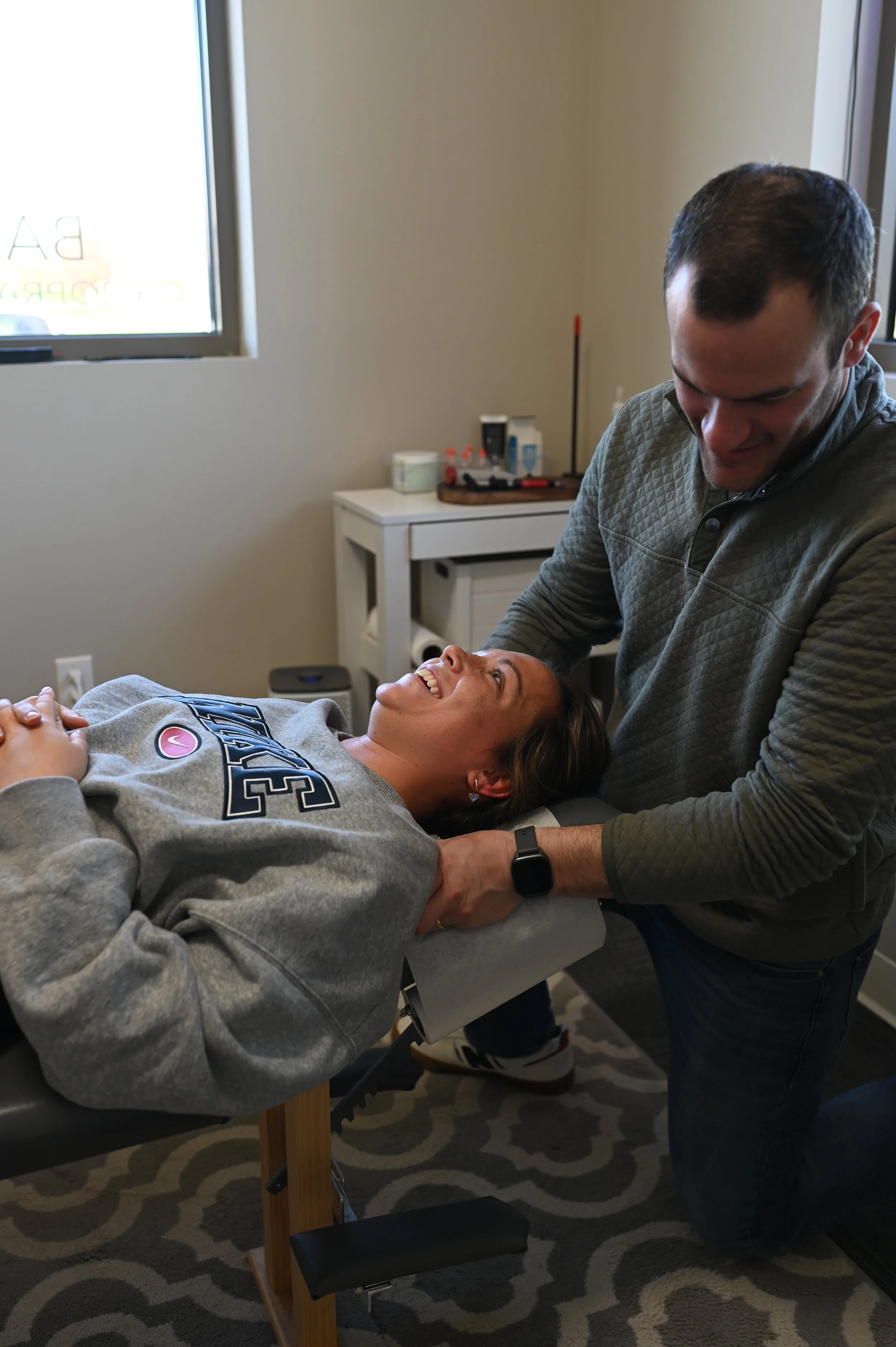
Movement is not just beneficial for the body. It is how the body stays calibrated. It is how the nervous system gets accurate information about what is safe. It is how tissues stay healthy. It is how pain signals get modulated. Rest has its place, but prolonged avoidance of movement tends to make both the physical and psychological situation worse, not better.
This is why our approach is not about finding reasons to restrict you. It is about understanding what is actually happening in your body so we can find the smartest, most specific path back to the things you want to do.
The SFMA Difference
When Dr. Jeremy sees a new patient at our Windsor office, the assessment process is not focused on isolating the painful spot and treating it in isolation. The Selective Functional Movement Assessment, the SFMA, looks at how your whole body is moving. It finds where the real breakdowns are happening, which are often not at the site of pain at all.
That matters for the mental side of chronic pain too. When someone has been living in fear of movement, having a provider actually look at how they move and say, "here is specifically what is happening and here is why," changes something. The unknown is replaced with information. The vague fear gets a specific shape. And a specific problem has a specific solution.
That is a very different experience than being told to rest, ice it, and come back in two weeks.
Getting Back Means More Than the Physical Part
Recovery from chronic pain, especially when it has been going on for months, almost always involves both the physical and the psychological. Expecting the physical fix to automatically resolve the anxiety and identity disruption is asking too much of the body alone.
Some things that can genuinely help alongside your care:
Reconnecting with your community around the activities you love, even if you are not fully participating yet, keeps that identity thread alive. If you cannot run, showing up at a race to cheer for your group still matters.
Setting small, specific movement goals, agreed on with your provider, gives your nervous system accurate data that movement is safe. Each successful rep or short walk is information that counters the fear avoidance pattern.
Talking about the emotional side with someone you trust, whether that is a partner, a friend, or a mental health professional, is not a sign that the pain is imaginary. It is an acknowledgment that pain is a full-body experience, and the mind needs care too.
And asking your provider to explain things clearly, to tell you not just what to do but why, gives you something that fear cannot survive very well: understanding.
You Do Not Have to Accept That This Is Just How It Is
If you are somewhere in Dane County right now, maybe in DeForest or Sun Prairie or Verona, sitting with a pain problem that has been quietly shrinking your world, the most important thing to know is this: the version of yourself that could run, or lift, or play, is not gone. It is just waiting for the right approach.
Pain that has gone on for a while tends to feel permanent. It is not. But it does usually need more than rest and generic advice to turn around. It needs someone who will actually look at how you move, explain what they find, and build a plan that keeps your life in the conversation.
That is what we do at Balanced Chiropractic + Wellness.
You were made to move. And we want to help you get back to it.
Ready to understand what is actually driving your pain? Book a new patient appointment with Dr. Jeremy at Balanced Chiropractic + Wellness in Windsor, WI. Serving Madison, DeForest, Sun Prairie, Verona, and the broader Dane County area.