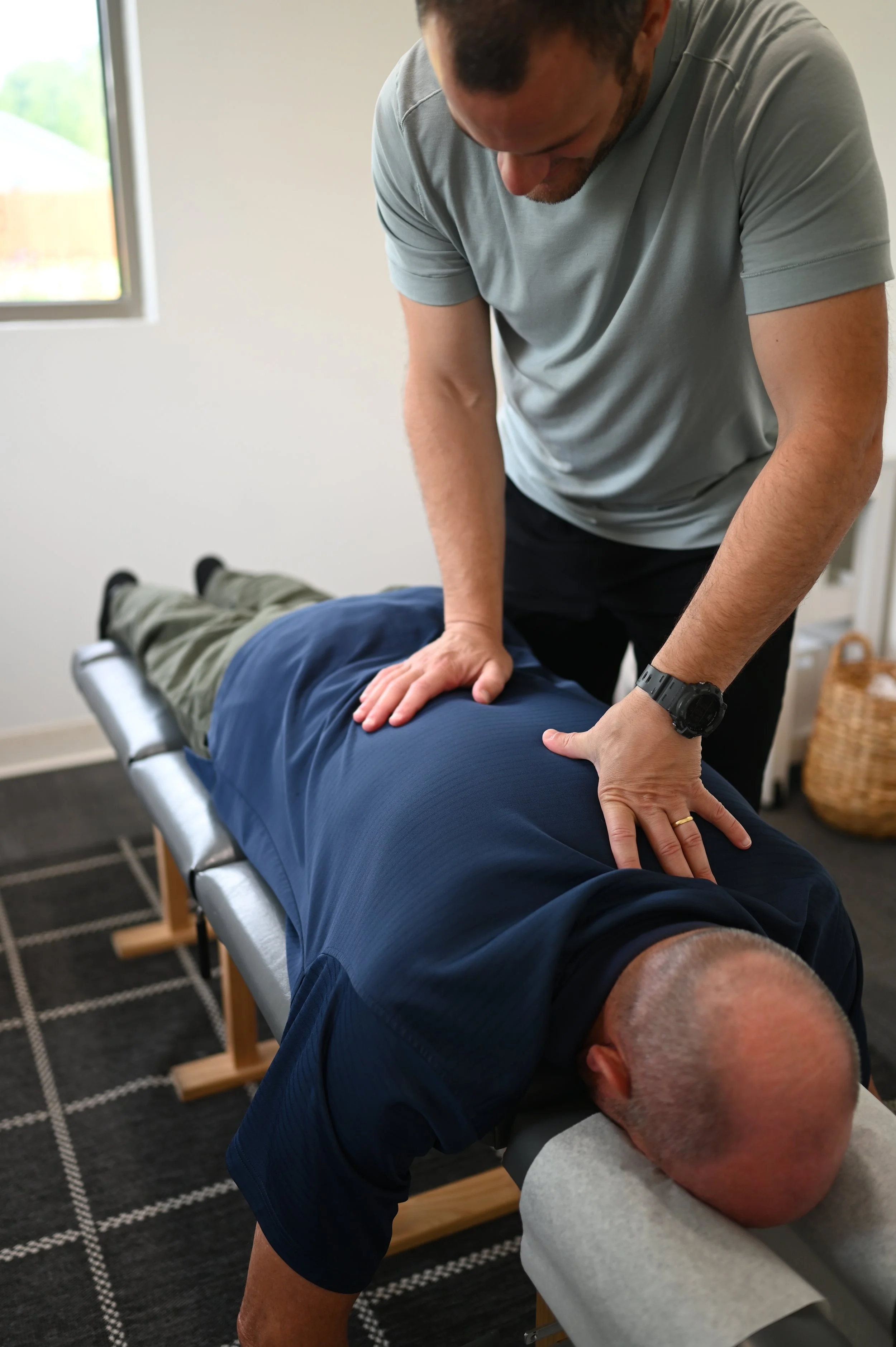
If you woke up this morning barely able to stand up straight after shoveling your driveway, you are not alone. Back pain after shoveling snow is one of the most common complaints chiropractors in the Madison area see every single winter. And it is not because you are out of shape or getting old. It is because shoveling is one of the most mechanically demanding things you can ask your body to do, especially when your body is not prepared for it.
The good news is that understanding why it happens puts you way ahead of most people. Once you know the real reason your back gave out, you can stop guessing and start getting better.
Why Shoveling Snow Is So Hard on Your Back
Most people assume they hurt their back because they lifted wrong. And while technique matters, the real story is more complicated than that.
Shoveling combines three things that are each hard on their own: heavy load, repetitive motion, and rotation under that load. When you scoop a shovel full of wet snow and throw it to the side, you are loading your spine and twisting it at the same time. Do that 200 or 300 times in 30 minutes, and it is less like lifting and more like a workout your body never trained for.
Add in cold temperatures, which cause your muscles to tighten and restrict blood flow, and you have a situation where your tissues are less pliable, less prepared, and less capable of absorbing force the way they normally would.
What actually goes wrong in your back comes down to a few different things depending on your situation.
Muscle Strain and Spasm
This is the most common outcome. Your lower back muscles, especially the erector spinae and quadratus lumborum, get overloaded and go into a protective spasm. This is your body trying to lock down the area to prevent further injury. It is painful and limiting, but it is also a signal, not a diagnosis. The spasm is the symptom. The overloaded movement pattern is the problem.
Disc Irritation
The discs in your lumbar spine act as shock absorbers between each vertebra. When you load and rotate your spine repeatedly, especially when those muscles are cold and already fatigued, the pressure on those discs increases significantly. This can lead to a disc bulge or herniation, which often shows up as pain that radiates into your glutes, hip, or down one leg. If your pain feels like it is spreading outward rather than staying in one spot, this is worth getting assessed sooner rather than later.
Joint Dysfunction in the Lumbar Spine or Pelvis
Your lumbar spine and pelvis are meant to work together as a system. When one segment gets overloaded, the joints can lose their normal range of motion and get stuck in a position they do not want to be in. This shows up as stiffness, sharp pain with certain movements, and that sensation of feeling like something is out of place.
Why the Problem Is Usually Bigger Than Just Your Back
Here is the part most people do not hear when they show up at a provider's office with snow shoveling back pain.
Your lower back is not supposed to be the primary mover in a shoveling motion. Your hips and core are supposed to do most of the work. When they do not, your lumbar spine picks up the slack. Over and over again.
If your hips are stiff or your core is not engaging the way it should, your back will compensate every single time you bend, lift, or rotate. Shoveling snow just exposes that pattern in a dramatic way because the load and the volume are both high.
This is why treating the back pain alone often gives people temporary relief but not lasting results. You feel better for a week or two and then the next heavy lift or workout brings it right back. The pattern that set you up for injury is still there.
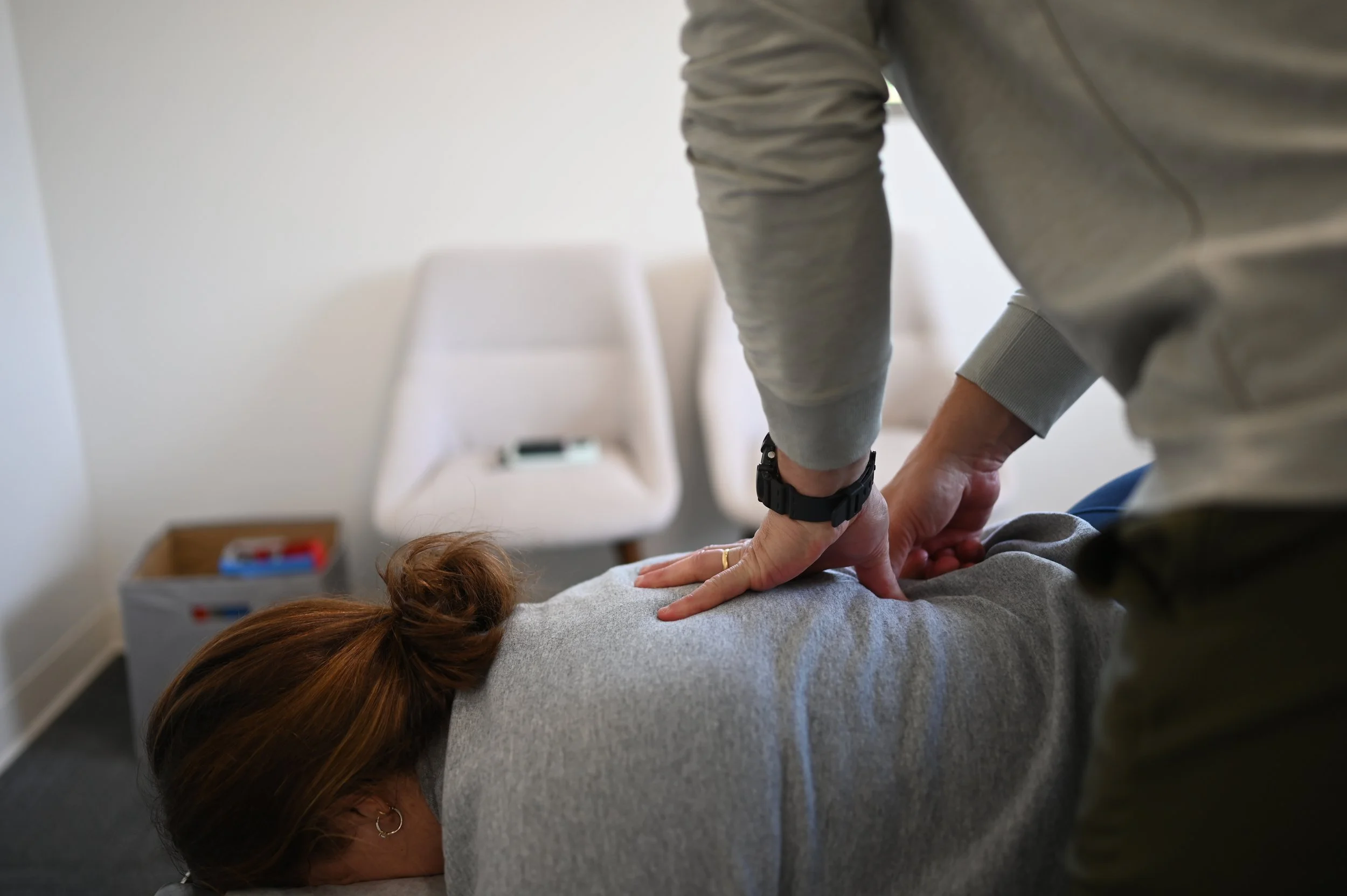
A whole-body movement assessment looks at how your hips move, how your core activates, and how your spine and pelvis coordinate together. That is how you find the actual root cause instead of just chasing the pain.
What You Can Do Right Now
If your back is already flared up from shoveling, here are a few things that can help in the short term.
Keep moving gently. Complete rest actually slows recovery for most types of back pain. Short, gentle walks help maintain circulation and prevent the surrounding muscles from stiffening further. You do not need to push through pain, but you also do not need to be flat on the couch.
Use heat or ice based on what feels better. In the first 24 to 48 hours, ice can help reduce inflammation. After that, heat tends to work better for muscle spasm and tightness. If you are not sure which one your situation calls for, it is worth getting a proper assessment.
Avoid the movements that provoke sharp pain. Bending forward and twisting at the same time is usually the most aggravating combination. Modify how you move around the house until you have a clearer picture of what is going on.
Do not wait too long to get it looked at. Back pain that lingers beyond a few days, radiates into your leg, or is affecting your sleep is telling you something. The sooner you understand what is happening, the faster you get back to normal.
When to Come In
If you are dealing with back pain from shoveling snow and any of the following sound familiar, it is time to get assessed.
Your pain is not improving after two or three days. The pain is radiating into your hip, glute, or leg. You are waking up stiff and it takes a long time to loosen up in the morning. You have had this happen before and it keeps coming back. You want to understand why it happened so it does not happen again next time.
At Balanced Chiropractic and Wellness, we do not just treat your back pain and send you home. We look at how your whole body is moving to find the pattern that led to the injury in the first place. That means you get real answers, not just temporary relief.